INDOFUN.NL
INDOFUN.NL
INDOFUN.NL
INDOFUN.NL
INDOFUN.NL
BAKPAO
LEMPER
LUMPIA
PASTEL / SMALL PASTRY
RISOL(LES)
Your advertisement here? Click for more information!
Your advertisement here? Click for more information!
Your advertisement here? Click for more information!


Herbs & Spices
Below are the most commonly used herbs and spices in Indian and Indonesian cuisine.
De Indische en Indonesische keuken
De Indische keuken kent net als de Indonesische keuken veel variaties. Net zoals de Indonesische keuken veel mondiale invloeden heeft, heeft de Indische keuken invloed vanuit de Nederlandse én mondiale keuken.
Zo worden spruitjes toegevoegd aan het Indische gerecht sayur lodeh, terwijl de toevoeging van spruitjes (nog) onbekend is in de Indonesische keuken. De traditionele keuken bestaat nog steeds, maar door toedoen van jongere Indische kookkunstenaars beweegt de Indische keuken zich langzaam maar zeker richting de haute cuisine, met Instagram-waardige foto’s.
Verschillende bekende, mondiale hamburgerketens bieden in Indonesië de rendang-burger aan en in Nederland worden broodjes babi kecap (ketjap) en de rendang-kroket aangeboden. Bapau en lumpia, van oorsprong Chinese snacks, en saté zijn via Nederlands-Indië Nederland binnengekomen en krupuk met de meest (verzonnen) exotische namen ligt al langer in de supermarkt. Evenals de kant-en-klare Indische maaltijden zoals nasi en bami, al smaakt het niet naar de authentieke gerechten.
Het aantal restaurants en kleinere eethuizen dat gerechten uit de authentieke Indonesische (en niet uit de Indische) keuken aanbiedt en gerund wordt door oorspronkelijke Indonesiërs, is groeiende in steden als Den Haag, Utrecht en Amsterdam.
De Indische toko en de uitgebreide keuken is wereldberoemd en geheel ingeburgerd in de Nederlandse maatschappij. De Indische en ook de Indonesische keuken kennen heel veel ingrediënten. Voor een aantal ingrediënten, gewassen en kruiden zijn er complete oorlogen gevoerd in vroegere tijden. Tegenwoordig kun je zelfs zonder ruzie te maken de meeste kruiden en gewassen bij de supermarkt, de wekelijkse markt of toch zeker bij de Chinese of Indische toko halen.
Het is tegenwoordig niet gek om de supermarkt of plaatselijke toko af te speuren naar za’atar, vadouvan of garam masala. Zelf kruiden- of specerijenmixen maken wordt steeds populairder en kruiden uit eigen tuin zijn bijna niet meer weg te denken uit de keukens van vele thuiskoks. Maar wat ís een kruid? En wat is een specerij? Het ontdekken van de juiste componenten voor je gerecht is een kwestie van uitproberen, maar wat basiskennis over deze twee smaakmakers is natuurlijk altijd handig.
Smaken uit de natuur
Over kruiden en specerijen zijn de meningen verdeeld; wat voor de één een kruid is, is volgens de ander een specerij. Als je Van Dale raadpleegt, kom je te weten dat een kruid ‘een klein gewas met sappige, niet houtachtige stengel’ is. Rozemarijn en tijm hebben overigens wél een houtachtige stengel en vallen voor veel mensen gewoon onder kruiden. De planten groeien vaak in gematigde klimaten en het zijn vooral de verse blaadjes die worden gebruikt. Specerijen zijn de gedroogde varianten van stengels, wortels, stampers en dus de andere delen van een plant, en groeien vaak in (sub)tropische klimaten.
Het gebruiken van je zintuigen tijdens koken met kruiden en specerijen is essentieel.
Kruiden en specerijen zorgen voor een rijke wereld aan smaak en geven beide kleur en diepgang aan je gerecht. Het gebruiken van je zintuigen tijdens het koken is dan ook essentieel. Als je aan de slag wilt gaan met verschillende kruiden en specerijen, zijn er een aantal tips die goed van pas kunnen komen om je gerecht op de juiste manier smaak te geven.
Kruiden en specerijen op hun best
Verse kruiden als peterselie, munt, basilicum, koriander en bieslook kun je zo eten. Als je ze toevoegt aan een gerecht, dan kun je dit het beste aan het einde van de bereiding doen, zodat de smaken niet vervliegen. De beste manier om verse kruiden te bewaren is door ze verspreid op een vochtig keukenpapiertje in de koelkast te leggen. Zo blijven ze vaak een paar dagen goed. Met uitzondering van harde kruiden als rozemarijn en tijm; deze bewaar je het beste luchtdicht op een koele plek.
Wanneer je specerijen in een gerecht gebruikt, is het heerlijk om wat olie in de pan te doen en de specerijen licht te verwarmen.
Specerijen staan erom bekend warmte en rijkheid aan je gerecht te geven. Ze zijn er van wortel (gember), van vruchten en bloemen (kruidnagel, nootmuskaat, peper, paprika, vanille) of bijvoorbeeld van schors (kaneel). Wanneer je deze in een gerecht gebruikt, is het heerlijk om wat olie in de pan te doen en de specerijen licht te verwarmen voordat je begint met de rest van het gerecht. Zo komen die heerlijke geuren vrij en houd je de smaken op hun best.
Ontdek pure smaken
Er zijn steeds meer soorten kruiden en specerijen te koop, maar ook in je eigen keuken kun je het een en ander zelf maken. Verse kruiden drogen? Leg ze op een schone en droge theedoek, draai af en toe om en gebruik het wanneer ze zó droog zijn dat je ze kunt verkruimelen. Om je eigen specerijenmix te creëren kun je hele specerijen vijzelen en mengen of gebruik je voor het gemak een elektrische maler of koffiemolen. Varieer, probeer en ontdek zelf de pure smaken uit de natuur.
Zoek je inspiratie voor een lekker recept met specifieke kruiden en/of specerijen? Kijk dan bij onze gerechten en kies de smaak die jij wilt.
Bronnen
www.voedingscentrum.nl
De kracht van kruiden - Peter Lute
Agar agar (agar² - seaweed)
Agar², like pectin, is a plant-based gelling agent and indispensable for making jam and jelly. Pectin is a byproduct of the fruit juice industry; it is extracted from the peels of citrus fruits and apples. Pectin therefore occurs naturally in fruit, but there are large differences in quantity. High levels of pectin are found in redcurrants, quinces, citrus fruits, apples, plums, gooseberries, (unripe) apricots, and medlars. Ripe fruit contains the most pectin, while unripe fruit contains significantly less. Overripe fruit also contains less pectin, a handy fact to know when making jam.
Jam doesn't just become jam. The pectin only thickens the mixture if sugar and acid are also present. You can make the mixture more acidic by adding citric acid, and use regular granulated sugar. Once the proportions are right, cook the mixture until the warm jam/jelly clings to the back of a spoon. As the mixture cools, it will thicken further.
Rule of thumb for pectin: 1 to 4 grams of pectin per kilo of fruit. The total sugar content (naturally occurring fructose plus added sugar) must be at least 55% and the acidity around 3.5.
Agar² is also a plant-based product; it is made from the cell walls of certain types of seaweed. Agar² comes from Malay and means 'algae'. When ground, it becomes a white powder without odor or taste. One to two grams is sufficient for 1 liter of jelly or jam. One gram for slight thickening, two grams if you want a firm jam/jelly. Dissolve the powder in a cold liquid, bring this liquid to a boil, and let it simmer for a few minutes. Gelling is therefore not dependent on acidity and the amount of sugar, as is the case with pectin. With agar², you can therefore make sugar-free or low-sugar jam.
In Indonesian cuisine, agar² is used to make desserts. Deliciously sweet, yet sugar-free! Agar² dissolves above 85°C, but solidifies upon cooling from 40°.


Asam (tamarind)
Tamarind, Indian date, tamarind, tamarindo, asem / assem / asam (Indonesia), kakapoesie (Suriname), มะขาม / ma kham (Thailand) and me (Vietnam). What is it?
Tamarinds are large pods (7-20 cm) of the tropical tree Tamarindus indica. They look a bit like bare, thick, brown, dried-out broad bean pods, filled with flesh/mush that also contains hard seeds (see photo above). It is the sticky mush that matters. You can pick it out of the pods yourself or buy it already peeled in blocks.
How to use?
Put some sticky tamarind in a small bowl and pour some hot water over it. Wait a few minutes, then knead briefly so that as much pulp as possible dissolves in the water. Afterwards, separate the pulp from the liquid using a sieve or simply your fingers. Discard the remaining fibers/pieces; use the “thick juice” (asem water) for cooking. This juice is also available ready-made in jars as reduced tamarind paste. This is slightly more concentrated than homemade asem water, so be careful not to use too much. Tamarind has a sour taste and, like vinegar or lemon juice, is used as a tenderizer and for a fresh touch in marinades and stews, but is also processed with sugar into sweet drinks and candy. The blocks of pulp keep for quite a long time outside the refrigerator, while the jars should be kept in the refrigerator. Even the pods often remain good for up to 2 years.
The tamarind fruit contains many phytonutrients. The Indian date primarily contains organic fruit acids which have medicinal properties. It contains tartaric acid, malic acid, citric acid, succinic acid, oxalic acid, and a small amount of ascorbic acid, better known as vitamin C. Additionally, it contains pectin, gums, lactic acid, nicotinic acid, and various essential oils such as the monoterpenes geraniol, limonene, and geranial.
Tamarind is rich in vitamins and minerals. Thiamine, or B1, is the most abundant vitamin. 100 grams of tamarind contains 26% of the Recommended Daily Allowance (RDA) of B1. Vitamin B3, or niacin, is present in the fruit at 12% of the RDA. Vitamin C is present at 6% of the RDA, and pyridoxine, or B6, at 5%. The remaining vitamins have percentages lower than 5%. In terms of minerals, tamarind is particularly rich in iron . 100 grams of tamarind provides 35% of the RDA. Other minerals in this tropical fruit include: magnesium (23%), phosphorus (16% RDA), potassium (13% RDA), copper (10% RDA), and calcium (7% RDA). The remaining minerals have very low percentages. Furthermore, 100 grams of tamarind contains 5% of the RDA of protein and 13% of the RDA of fiber.
Tamarind can help with constipation, infectious diarrhea, intestinal worms, obesity, cardiovascular disease, malaria fever, sore throat (gargling with tamarind drink), blood purification, cancer, and eye infections (drops made from tamarind seeds).
In Indian folk medicine, tamarind has been used for centuries as a remedy to combat diarrhea and constipation. Science has confirmed its healing effect on these two conditions. Fruit acids, pectin, and gums in the Indian date increase the fluid content in the intestines, resulting in a mild laxative effect. Due to its mild effect, it is ideal for children. It is used by adults for constipation associated with gallbladder and liver disorders. Tamarind ensures softer stools, which is a godsend for people with hemorrhoids.


Cengkeh (clove)
The clove (Caryophyllus aromaticus) is the dried, still-closed flower bud of the clove tree (Eugenia caryophyllata). The larger the flower bud and the wider the calyx, the better the quality. It is widely used as a fragrant spice in the kitchen. It has versatile effects; cloves are used for stomach and intestinal disorders. Cloves are packed with antioxidants, flavonoids, and the metals manganese, iron, magnesium, and zinc. It also contains numerous vitamins such as vitamin C, vitamin B12, vitamin K, and vitamin E. Cloves can be used to improve digestion, fight infections, and strengthen bones. Cloves can be administered for various ailments, such as toothache, inflammation of the oral mucosa, loss of appetite, bloating, nausea, digestive problems, flatulence, and bad breath. For external use, cloves are suitable for treating muscle pain, joint pain, or back pain.
Cloves will help loosen mucus in the lungs, allowing us to cough it up and clear the lungs. Additionally, the herb's antibacterial, antimicrobial, and anti-inflammatory properties will combat bacteria and viruses.
Take a sweet, ripe apple (any variety). Take 20-30 cloves. Stick the cloves here and there into the apple. Place the clove-decorated apple on a small plate in the center of your garden table. Watch. You will be amazed at how all the flies suddenly disappear.
.jpg)

Lemon leaf
Also known as djeruk purut, djeroek poeroet, lemon leaf, kaffir lime leaf, daon djeroek. It is an aromatic leaf, similar to bay leaf but with a different flavor. The taste is lemony. It is widely used in Indonesian, Thai, and Indian cuisine.
It is the dark green, glossy leaf of the Kaffir lime, a shrub native to Southeast Asia. The leaves always grow in pairs, like a tandem on the branches. These lime leaves are often flown in fresh from Thailand and can be found in the produce section of Asian grocery stores. It is more practical to buy them frozen and keep them in the freezer, so you always have them on hand. Fold the leaf in half and pull the vein out. Now roll the leaf up tightly and cut it into thin strips. It is now ready for use.

Pandan leaf
If you have ever stepped into an Indonesian or Chinese grocery store, chances are you noticed the bright green cakes. These airy chiffon cakes get their color from pandan extract obtained from the leaves of the screw palm (Pandanus amaryllifolius). This tree grows in Thailand, Indonesia, Malaysia, and Tasmania, among other places.
The leaves of the palm are long, stiff, and reminiscent of enormous blades of grass. Once you have smelled it, you will recognize the scent from a mile away. It is reminiscent of a mix of warm nuts and vanilla. The aroma and flavor make the leaf so popular in Asian, and especially Malaysian and Indo-Caribbean, cuisine.
Pandan rice is so named because of its similar nutty aroma and taste. The rice smells much more subtle than the leaf itself. Some rice traders perfume the rice and pass it off as pandan rice.
There are several ways to cook with pandan. You can choose to buy fresh leaves at an Asian grocery store, but these are hard to come by, spoil quickly, and lose their flavor. To prevent spoilage, the leaves are often frozen. This isn't ideal either, but it is the best option for enjoying them for a long time. Once frozen, you can store them for up to a year. If you cannot get hold of fresh leaves, look for pandan extract (which can also be made at home) or paste at the store. This is concentrated, meaning you will need less of it than when using fresh leaves. Once you have found the fresh or frozen pandan leaves, the cooking can begin. You can use it in both savory and sweet dishes, although for sweets it might be easier to use extract or paste. If you want to add flavor to rice, soups, and sauces, for example, tie a knot in the leaf. This bruises the leaf, allowing the flavors to be released more effectively. Then, let it infuse into your dish.
In Oceania, the leaves are also processed into baskets, mats, and the like. The fruits of some species are eaten.


Banana leaf
Banana tree leaves (Musa Dwarf Cavendish) can get very dirty with dust, but also with soot from exhaust fumes; they are giant dirt traps. It takes quite a while to get the leaves really clean, and although aluminum foil is a fine substitute—clean and very easy to fold—a banana leaf does look very romantic on the table.
Banana leaf is used worldwide as a cooking and wrapping leaf, but especially in Southeast Asian, African, and Caribbean cuisine. Banana leaves are not edible but are used ceremonially as a natural wrap for steaming, baking, or grilling food. Unlike pandan leaf, for example, banana leaf imparts (almost) no flavor. On the other hand, the wrapped item retains its flavors and aromas for much longer.
You can also use fresh banana leaves under the grill. Use a sufficiently thick double layer so that you can remove the charred outer leaves before serving.
There are even parasols with a canopy made of banana leaves, perfect for filtering out harmful UV rays and protecting you from the sun and even the rain in the garden, on the terrace, or on the veranda.


Daun salam (salam leaf)
Daun salaam, salam leaf, Indonesian bay leaf, Indische laurier, or Syzygium polyanthum in Latin. Daun salam is the leaf of a shrub/tree from the myrtle family (Myrtaceae) and therefore has nothing to do with bay leaf, with which it is often compared or substituted. It is a typical ingredient in Indo- and Malaysian cuisine. It has no pronounced flavor, at most a little lemony, and thus resembles bay leaf only in appearance.
How to use? Crush or crumple one or more leaves and let them simmer in stews; only then will the flavor be released. Eating them raw or adding them to the dish "uncrushed" is pointless. It is best to fish the leaves out before eating the dish. If you omit them from a recipe, the result will not be very different. However, you can replace them with curry leaves or bay leaves. Salam leaves are available fresh, frozen, dried, and in powder form.
Various medicinal properties are attributed to daun salam. It works against hypertension (high blood pressure), improves digestion, eye inflammation, gout (lowering uric acid levels), lowers cholesterol levels, and lowers blood sugar levels (in diabetics). You can make traditional toothpaste from it by mixing dried salam leaves with dried orange peels and a little water. It will give you pearly white teeth!


Daun singkong (cassava leaf)
Cassava is the edible root of a shrub. This shrub grows primarily on the savanna and is also known as tapioca. The finger-shaped leaves of the shrub can also be eaten. The plant is resistant to drought and to locusts. Cassava can also grow in poor soil. In principle, cassava can be harvested all year round.
In addition to the cassava tuber, the young leaves are also eaten like spinach. The neutral-tasting product made from the cassava root is called tapioca. It is rich in starch and is used in cooking, as a thickening agent in food, and as a binding agent for medicinal tablets. Tapioca flour is gluten-free and therefore suitable for people with celiac disease. Although the plant contains a lot of starch and is nutritious, it also contains the toxic hydrogen cyanide in the form of glycosides, which must be removed from species with high levels before consumption. The content ranges from 20 mg HCN/kg of fresh tubers to as much as 1000 mg/kg.
By eating the leaves, you compensate for the lack of protein in the root. The roots are the part of the plant that is usually eaten raw. The properties of cassava Cassava contains a good dose of vitamins A and C, iron, potassium, and calcium.


Daun sereh (lemon leaf ~ lemongrass)
Lemongrass or sereh? Lemongrass (Cymbopogon citratus), also known as sereh, consists of long stalks from the Far East that transition from white to green. The stalks are structured in layers (similar to leeks), but the leaves are much tougher. The flavor is a mix of lemon and lime, with the soft, creamy notes of coconut. Sereh is indispensable for lovers of Asian cuisine.
This fragrant lemongrass can be used for tea, in drinks, herbal remedies, and Eastern soups and meals.
Of the stems, the lower part in particular is very suitable for cooking and baking in Asian dishes. This tropical grass is equally versatile for the garden. It grows in clumps up to a maximum diameter of 1 meter.
The leaves are bright blue/green in color and smell like lemon when crushed. Lemongrass plants thrive in planters; when the leaves are touched, the plant releases a lemon scent. The plant grows well in all soil types and appreciates some water in the summer (it prefers a sunny location).
In India, it is used in the making of perfumes. Lemongrass is used medicinally for fever, cough, colds, bronchitis, and the flu. The presence of myrcene, a sleep-inducing phytochemical, may be responsible for the calming effect of this flavorful medicinal herb. Lemongrass provides sedation, relaxation, and acts as an analgesic.


Garam (table salt)
Table salt (sodium chloride) is a small white substance that is highly soluble in water and is used to flavor food.
Salt occurs naturally in the soil as rock salt in places where inland seas dried up in the geological past. It has been extracted from there for centuries (e.g. near Salzburg, which is not named that way for nothing: Salz is the German word for salt). Wars have been fought over salt. Salt is indispensable for human and animal organisms to survive. Sodium, a mineral in salt, is very important for the human body. Sodium regulates the fluid balance in the human body.
A little salt is good for you, but most Dutch people consume far too much salt. Men average 10 grams per day and women 7.5 grams, while 6 grams is the maximum for both. You need about 1 to 3 grams of salt per day. The mineral sodium in salt is important for regulating the body's fluid balance and muscle function. However, too much salt is bad for your blood pressure, and consequently for your heart, blood vessels, and kidneys. So avoid very salty products!
The salt trade formed the basis of many settlements, villages, cities, and entire cultures; the Celts, for example, lived largely from salt production.


Gula Jawa (Javanese sugar)
Gula Djawa, goela Djawa, gula Jawa, gula Java, Javanese brown sugar, Javanese palm sugar, Java sugar; palm sugar is obtained by tapping syrupy sap from a palm tree (Palmyra Palm), boiling it down, and then pouring it into blocks or discs to harden. Palm sugar consists largely of sucrose. The sugar has a light caramel flavor but is less sweet than our granulated sugar. Gula Jawa is used in many Indo-Dutch dishes, in both food and drinks.
Sugar drives up your calorie intake and also stimulates fat storage. If you want to lose weight, therefore, it is best not to eat too much sugar. For this reason, many people use alternative, diet-friendly sweeteners. Producers are all too happy to capitalize on this demand, resulting in a continuous influx of new sweeteners onto the market. The most recent hypes regarding natural sugar substitutes are palm sugar and coconut blossom sugar. A "natural sweetener" is generally non-chemical/synthetic in nature and not industrially refined. Preferably, the sweetener is also free of harmful toxins such as pesticides.
Sugars are simple to moderately complex carbohydrates with a sweet taste. Table sugar typically comes from sugar beets (beet sugar) and sugarcane (cane sugar). However, there are many more plant parts that contain sugars. The flowering stalk of palms is one of them.
Palms, or palm trees, are large, herbaceous plants. Palm sugar is extracted from a number of specific palm species, including the date palm, sago palm, and arenga palm. Palm sugar has a somewhat molasses-like flavor reminiscent of dark brown cane sugar; the texture is also somewhat similar.


Gula Pasir (kristalsuiker)
Suiker staat al heel lang bekend als middel om voedingsmiddelen te conserveren. Jam, gekonfijte vruchten en vruchten op siroop zijn daar voorbeelden van. Suiker is ook een belangrijke smaakversterker, bijvoorbeeld bij sommige groenten om de meligheid te dempen of de natuurlijke smaak te accentueren. Vooral in patisserieproducten – zoals populaire (cup)cakes, beignets en wafels - wordt suiker op verschillende manieren gebruikt om te decoreren.
Andere namen die je ook wel tegenkomt voor kristalsuiker zijn melissuiker, tafelsuiker of sacharose. Die laatste is overigens ook de wetenschappelijke benaming voor deze suiker. Zoals gezegd is dit dus de standaard suiker die ik in al mijn recepten gebruik. Deze suiker is ook veruit het makkelijkste verkrijgbaar. Kristalsuiker wordt ook gebruikt om suikerklontjes van te maken. De suiker wordt dan iets vochtig gemaakt, stevig tegen elkaar gedrukt en vervolgens gedroogd.
Fijne suiker
Fijne suiker is dezelfde soort suiker als kristalsuiker, maar dan fijner. Deze suiker wordt ook wel automatensuiker genoemd en heeft als voordeel dat hij sneller oplost. Om deze suiker te maken wordt kristalsuiker gezeefd, zodat de fijnere suiker van de rest kan worden gescheiden.
Poedersuiker
Poedersuiker is nog fijner dan fijne suiker en wordt ook wel bloemsuiker genoemd. Vaak wordt er wat zetmeel of een ander antiklontermiddel (zoals calciumfosfaat, E341) toegevoegd om het klonteren tegen te gaan. Poedersuiker lost heel snel op en is perfect om taarten en gebak voor het serveren te bestuiven.
Suikerbakkerspoeder
Nog één stap fijner dan poedersuiker is suikerbakkerspoeder. Je komt dit in Engelse recepten ook vaak tegen als icing sugar. Het bevat geen zetmeel als antiklontermiddel, maar wel wat gedroogde glucose. Door de fijne structuur is suikerbakkerspoeder perfect voor glazuur en voor het werken met marsepein en fondant.
Grove suiker
Deze suiker is grover dan kristalsuiker en wordt vooral gebuikt als decoratie, bijvoorbeeld op roomhoorntjes of op vlaaien. De suikerkorrels blijven heel tijdens het bakken en zijn daardoor nog lekker knapperig na het bakken. In Nederland is grove suiker moeilijk verkrijgbaar. In België en Duitsland vind je het in bijna iedere supermarkt.
Vanillesuiker
Dit is fijne suiker waaraan (in het meest gunstige geval) vanille(extract) is toegevoegd. In de praktijk is het helaas meestal vanillinesuiker (lees maar eens goed op de verpakking). Daar is alleen een kunstmatige smaakstof (vanilline) toegevoegd aan de suiker, die weinig te maken heeft met vanille. Naast vanillesuiker zijn er ook andere smaaksuikers verkrijgbaar, bijvoorbeeld kaneelsuiker. Ook deze maak je heel makkelijk zelf door fijne suiker met wat kaneelpoeder te mengen.
Witte basterdsuiker
Om witte basterdsuiker te maken wordt er aan fijne suiker een invertsuikerstroop toegevoegd. Basterdsuiker lost sneller op dan gewone suiker en het gebak wordt sneller bruin. Bewaar basterdsuiker in een goed afgesloten pot, anders komen er harde klonten in.
Lichtbruine en donkere basterdsuiker
Aan de witte basterdsuiker is karamel en/of melasse (bijproduct uit de suikerproductie) toegevoegd. Deze dragen bij aan de smaak en kleur van het gebak.
Geleisuiker
Voor deze suiker wordt er aan de kristalsuiker pectine en citroenzuur toegevoegd. Dit zorgt er voor dat jams, marmelades en chutneys dikker worden en goed geconserveerd blijven.
Parelsuiker
Parelsuiker is samengeperste suiker en is in verschillende groottes te krijgen. Het wordt ook wel greinsuiker genoemd. De maten variëren van zo’n anderhalve millimeter tot ruim anderhalve centimeter. Parelsuiker wordt veel gebruikt in de bakkerij, bijvoorbeeld in suikerbrood. De suikerparels smelten niet tijdens het bakken en blijven lekker knapperig. In Nederland haal je parelsuiker bij sommige bak- en molenwinkels, in België en Duitsland vind je het vaak gewoon in de supermarkt.
Knettersuiker
Je kent dit waarschijnlijk nog wel van de diplollies van vroeger. Tegenwoordig wordt het ook steeds vaker in de patisserie gebruikt. Knettersuiker is niets anders dan gewone suiker waar koolstofdioxide (koolzuurgas, wat ook in frisdrank zit) aan toegevoegd is. Dit zorgt voor het knetterende effect.
Enkele feiten
-
Suiker(sacharose) is van nature aanwezig in suikerbiet, suikerriet en in fruit en groente;
-
Het diksap dat ontstaat tijdens het productieproces van suiker, bevat circa 65% sacharose;
-
Suiker is van oudsher een conserveermiddel. Alleen bij een suikergehalte >60% treedt geen bederf op;
-
Suiker heeft van nature de eigenschap dat het bij hogere temperaturen kan smelten en ontleden in glucose en fructose. Bij temperaturen >165°C ontstaat karamel.


Gula tebu (cane sugar)
Cane sugar is sugar made from sugarcane. Chemically, (refined) cane sugar is the same substance as 'ordinary' beet sugar.
The sugarcane juice is boiled down, crystallized, ground into raw sugar, and sieved, in a process similar to the production process for beet sugar, but with more steps.
Besides regular white cane sugar, there is also light brown (cassonade) and dark brown cane sugar, depending on the amount of added molasses. Less refined cane sugar is also available commercially, but the regular brown cane sugar in the Netherlands is white crystalline sugar to which molasses has been added for the brown color. Cane sugar is also used as a raw material for the manufacture of biofuel.
In the Middle Ages, cane sugar was considered a rare and expensive spice. It was regarded as a status symbol for the elite. From the 16th century onwards, cane sugar was produced on sugarcane plantations in European colonies in the Caribbean and South America, using slave labor. Cane sugar was also produced in colonies in Asia. A few productive plantations still exist in Indonesia. The raw sugar was transported to Western Europe in the form of sugar loaves and refined there in sugar bakeries and later in sugar refineries. When slavery was abolished in the 19th century, cane sugar was replaced on a large scale by beet sugar. However, Cuba remained an important producer until even after the Second World War. In Suriname, after the abolition of slavery, Javanese contract laborers were recruited and a central sugar factory was established on the Mariënburg plantation. The reason that sugar is primarily extracted from sugar beet and sugarcane is because these crops yield the highest concentrations of sugar and are therefore the most efficient.
Cane sugar is not healthier than granulated sugar or other types of sugar. Cane sugar contains minerals, but the amount is so small that it hardly contributes to meeting your daily needs. Cane sugar and granulated sugar consist of the same components (glucose and fructose) and are equal in calories: 4 kcal per gram.


Jahe (ginger)
Ginger is an ingredient in curry powder. In the Netherlands, ginger is primarily used in taaitaai, cookies, and pastries, such as gingerbread, breakfast cake, and speculaas. Ginger is not frequently consumed by the majority of Dutch people, although it does often appear in the cuisines of countries all over the world. With so many healthy properties, it makes sense to start adding ginger to more dishes or to enjoy a glass of ginger tea daily. In Indonesian cuisine, ginger is used in all kinds of savory dishes, including babi ketjap and babi pangang, which are popular among many. Ginger contains many healthy vitamins and minerals. As a result, ginger supports various processes in your body, such as digestion, and can help with certain ailments. In short, feel free to add ginger to your diet for a healthy and slim body. It fits perfectly into a healthy, low-carbohydrate diet.
Ginger is said to be good for your immune system, digestion, and vitamin absorption, among other things. And if we are to believe the claims, it also promotes blood circulation, cleanses your body, combats pain, relieves nausea, and is anti-inflammatory.
Ginger as a flavoring in your food or as ginger tea fits into a healthy diet, states the Netherlands Nutrition Centre. But ginger as a medicine, for example in the form of a ginger shot, is something entirely different. You can make a ginger shot yourself, but it is also sold by various shops for about three euros per shot. If you are feeling nauseous, you can at least try to see if ginger works. This applies to nausea associated with pregnancy, for example (classic anti-nausea medications can cause serious birth defects), car sickness, travel sickness, and particularly seasickness. It reduces all symptoms typically associated with motion sickness, such as dizziness, nausea, vomiting, or cold sweats.


Jeruk (citrusvruchten)
Dé lijst met vele soorten! citrusvruchten zijn vruchten van bomen van het plantgeslacht ‘Citrus’. De Citrus is al meer dan 2.000 jaar oud en vanwege zijn leeftijd zijn er heel veel soorten citrusvruchten te koop. De teelt ervan wordt reeds vermeld in Chinese kronieken van 2200 jaar voor onze jaartelling. De meeste citrusvruchten die wij in Nederland hebben zijn kruisingen van de oorspronkelijke soort; citrusvruchten laten zich onderling makkelijk kruisen. Citrusvruchten zitten vol vitamines en gezonde antioxidanten. En ze hebben allemaal hun eigen sterke punten. Vijf (on)bekende soorten citrusfruit en hun gezonde eigenschappen op een rij. Naast de hieronder getoonde soorten, heb je bovendien nog de Jeruk peras, de Jeruk bambangan en vele andere.
Sinaasappel (jeruk)
Al het citrusfruit is rijk aan vitamine C en foliumzuur, maar sinaasappels spannen de kroon. Met één sinaasappel krijg je bijna 90 procent binnen van de aanbevolen dagelijkse hoeveelheid (ADH) van vitamine C, en 20 procent van de ADH van foliumzuur. Beide vitamines zijn goed voor de weerstand. Foliumzuur is ook nog eens goed voor het geheugen en de concentratie.
Limoen (jeruk nipis)
Het kleine groene zusje van de citroen blinkt uit in vitamine B6. Van de hele citrusfamilie bevat limoen er het meest van. Vitamine B6 is goed voor het bloed, de hormonen, de zenuwen en de weerstand, maar ook voor het geheugen, de concentratie en de gemoedstoestand. Het helpt zelfs bij vermoeidheid.
Citroen (lemon)
Deze zure vrucht wint het van zijn familieleden als het gaat om het gehalte aan vitamine E, een antioxidant die de lichaamscellen beschermt tegen vrije radicalen. Dit zijn agressieve stoffen die schade kunnen veroorzaken aan cellen en weefsels. Op de lange termijn vergroten vrije radicalen mogelijk de kans op kanker en hart- en vaatziekten.
Verder is citroen de 'slankste' van de familie. Een citroen levert slechts 23 calorieën en dat is 25 procent minder dan gemiddeld in citrusfruit zit.
Mandarijn (jeruk keprok / jeruk manis / jeruk ponkam)
Door mandarijnen te eten, geef je je ogen goed de kost. Vergeleken met andere citrusvruchten bevatten mandarijnen het meeste luteïne, een gele kleurstof die de ogen beschermt tegen zonlicht. Ook zit in mandarijnen 50 procent meer vitamine A dan gemiddeld in citrusfruit. Dankzij vitamine A kunnen de ogen zich aanpassen aan schemerlicht.
Kumquat
Klein maar fijn, zo zou je de kumquat kunnen omschrijven. Dit oranje eenhapsvruchtje (je eet ’m met schil en al) verslaat de grotere citrusvruchten met vlag en wimpel wat betreft vitamine B2, B3, magnesium en koper. Die voedingsstoffen zorgen van binnenuit voor een mooie huid. Kumquat bevat van al het citrusfruit ook de meeste vezels: ruim twee keer zoveel.
Grapefruit (jeruk Bali)
Opvallend aan grapefruits is het hoge gehalte aan lycopeen, een antioxidant die ook in tomaten zit en die tegen prostaatkanker beschermt. Grapefruits bevatten ruim 27 keer zoveel lycopeen als gemiddeld in citrusfruit zit. Overigens bevatten tomaten nog altijd het meeste lycopeen: zo’n 10 keer meer dan grapefruits. De pomelo, familie van de grapefruit, wordt ook Jeruk Bali genoemd. Het zijn grote joekels: ze kunnen wel 30 centimeter in doorsnee worden. In de dikke geelgroene schil ligt de vrucht, die een stuk kleiner is dan de buitenkant doet vermoeden. Pomelo smaakt fris en lichtbitter, maar is zoeter dan grapefruit.
Kaffir limoen (jeruk limo / jeruk limau)
Klein groengeel citrusvruchtje, half zo klein als een pingpongbal, vrucht van de kaffir lime tree, het boompje dat ook ‘limoenblaadjes‘ oftewel jeruk purut voortbrengt. De blaadjes en ook het sap worden vooral gebruikt in de Thaise, Maleise en Indonesische keukens. Jeruk limo heeft een matte en enigszins knobbelige schil en een fris-zure, aromatische smaak.


.jpg)
Jinten (cumin seeds)
Jinten, also known as cumin (Cuminum cyminum), cumin seed, djinten, djintan, djienten, cumin (GB), jintan (Indonesia), or Jira / Jeera (India), is an annual plant in the Apiaceae family that grows to about 30 centimeters tall. It is a close relative of, for example, anise, caraway, and fennel. The plant itself has thin stems that resemble fennel and lilac or white flowers. The plant is used as a spice with a full, slightly bitter, sharp, earthy nutty flavor. When cooking with cumin, heat the seeds first so that the aroma and flavor are released. Let them warm up for a few minutes in a thick-bottomed pan over low heat while stirring. Use cumin in sauces or stews.
Black cumin seed is especially beneficial for patients with type 2 diabetes mellitus, commonly known as diabetes patients. A 2010 Saudi Arabian study found that consuming two grams of black cumin seed per day helped maintain blood insulin levels. Black cumin seed appears to be one of the most effective natural remedies for Hashimoto's disease. Among other things, it improves thyroid function and blood lipids (cholesterol and triglycerides). Cumin helps you achieve a slim figure and a flat stomach more easily. It promotes digestion and relieves flatulence. Cumin seed is naturally rich in iron. One teaspoon of ground cumin contains 1.4 mg of iron, or 17.5% of the RDI for adults ( 5 ). Iron deficiency is one of the most common nutrient deficiencies.


Kemiri
Kemiri (Aleurites moluccana) is sometimes confused with the macadamia nut, which looks roughly the same when shelled but has a completely different use and taste. The tree's original habitat is unknown because it is cultivated in so many places. The tree grows throughout the tropics, in both the New and Old Worlds. Kemiri nuts (candlenut, candleberry, Indian walnut, kukui, buah keras) have a robust nutty flavor and aroma. The nut has a high oil content. When cracked, they resemble hazelnuts somewhat, though they are a bit larger and slightly less sweet. Kemiri nuts are widely used in Indonesian and Malaysian cuisine, particularly in finely ground spice blends and stews. They are best enjoyed by roasting them until golden brown before use, for example, for 10 minutes in an oven at 160 degrees Celsius. They are delicious in fish, chicken, and vegetarian dishes. It is better not to eat them raw, because they are mildly toxic then, but only dangerous in large quantities.
Candlenut oil is also used for hair care in Indonesia.


Kencur
Kencur (kentjoer) is the rhizome (Ø 1-2 cm) of Kaempferia galanga, a monocotyledonous plant and member of the ginger family. It also looks a bit like ginger root, but is much smaller, with a browner exterior and a whiter interior. Fresh kencur is actually only used in the cuisines of Indonesia and Malaysia. Kentjoer belongs to the same group as the galangals (laos krachai and sand ginger), but differs from the other galangals in the color of the rhizome and the absence of a stem on the plant. Not only the stems but also the leaves of the kencur are used in various recipes. A kencur plant does not grow taller than 10 to 15 cm and has four large violet-green leaves. This plant is mainly found in open areas, primarily in Indonesia, South China, Taiwan, and Cambodia. Kencur is available as a rhizome, tuber, dried, in powder form, and as oil. Kencur has a spicy flavor blend of pepper and ginger. Kencur has a dominant taste and smell, so it is advised to use it sparingly in dishes. It has a strong camphor-like taste and smell. It is great for simmering in stews and soups. Grating is also an option, which adds even more flavor.
Fresh kencur should be kept cool, but it can also be frozen. Kencur is also very tasty dried and ground. The aroma, in particular, is delicious.
Kencur is also used as a medicine for various diseases; for instance, research has shown that it helps with thrombosis and brain disorders, among other things. The herb produces a substance that protects your brain from damage. Furthermore, kencur helps with flatulence and is expectorant. It also promotes digestion and provides support for a lack of appetite. Kencur can also help you cope with depression by stimulating certain substances in the body.
Beras kencur, finely crushed kencur, is used to treat sprains. The kencur is secured to the sprain with a bandage and placed on it.

.jpg)
Coriander
Coriander leaves and seeds are widely used in Asian cuisine. Coriander (Coriandrum sativum) is a plant belonging to the Apiaceae family. The plant is also known as 'coander' or 'bugweed'. The leaves have a fresh, dominant flavor, while the seeds are mild. The seeds have a sweet aroma.
Coriander fits into many dishes. In Indian cuisine, for example, the leaves are used in soups, sauces, and salads. Coriander leaves are also excellent as a garnish. The leaves resemble parsley. The powder, or ground coriander seeds, is used in Indian cuisine in soups, sauces, and marinades; in both sweet and savory dishes. In Indonesian cuisine, it is used in rijsttafel dishes, often in combination with cumin. Coriander seeds are best lightly roasted in a dry frying pan and then crushed to bring out the flavor. They are added to marinades and stews, among other things, but also to liqueur, ratatouille, and curry. Coriander is often a standard ingredient in curry spice blends and Dutch spice mixes such as speculaas and koekkruiden.
The stems of coriander are also edible and are used with beans and in soup. Fresh root (spicy) in curry.
Effects of coriander and its essential oil: the seeds are sedative, gently calming, promote digestion just like basil, reduce flatulence, and relieve migraines. In Indonesia, coriander is used together with betel nut as a remedy for headaches and stomach problems. In Iran, coriander leaf is traditionally prescribed for anxiety attacks. The essential oil is distilled from the seeds. This coriander oil is spicy, is added to perfumes and incense, adds flavor to toothpaste, for example, and is added to massage oil for facial neuralgia and cramps.

Kunyit (turmeric)
Turmeric, Indian yellow root, koenier (Surinamese-Dutch), koenjit (Dutch East Indies), kunyit (Indonesian), and formerly also called tarmeriek (an anglicism, see for example turmeric), is a spice derived from the plant Curcuma longa, a member of the ginger family. Kunyit is used not only for its flavor but especially for its yellow color. For example, in curry blends, piccalilli, and even margarine. It is also sometimes used to replace the much more expensive saffron, hence the name “Indian saffron”. The root is bright orange, but it colors dishes yellow.
You can simmer the root in slices in curries, grind it into bumbu and curry paste, or grate it on a microplane grater. To color dishes like nasi kuning, turmeric is first grated and then squeezed out. The liquid is then used to color the rice. The taste is slightly bitter, mustardy, and earthy, especially in powder form. However, because it stains so terribly (plastic gloves are not an unnecessary luxury), turmeric powder is actually very convenient. Usually, half a teaspoon of powder is enough for a recipe. Fresh turmeric can be kept in the refrigerator for a while. Freezing is also an option.
In Indonesia (especially on Sumatra), the young leaves (daun kunyit) are also used. As a spice, but also as a vegetable. The large (50 cm long) leaves, just like bamboo or banana leaves for example, are mainly used to wrap food in or to serve on; you do not eat them afterwards.
Kunyit Asam is a traditional drink made from turmeric and tamarind that is good for the skin and helps to remedy bad breath and body odor. It is also said to help ensure a smooth menstrual cycle.


Laos (galanga)
Laos, also known as Thai galangal, is a herb commonly found in Indonesian cuisine. It has a mild ginger flavor with a citrus aroma. You can buy it in powder form at Asian grocery stores, but it is also available fresh. Alpinia galangal is related to ginger but has a more citrusy, peppery taste and aroma. It originates from Indonesia and is a perennial plant that can grow up to 2 meters tall. Shoots and leaves grow from thick rhizomes. After a number of years, these rhizomes are harvested, cut into pieces, and shipped fresh or dried to be used as a spice.
The root is mainly used in meat dishes. It is delicious in soups, sauces, and stews. Just like kencur, galangal is used to mask unpleasant odors. So if your dish doesn't smell very good, these two spices will help you!
The medicinal properties of this root are approximately the same as ginger. It appears to inhibit the formation of tumors. It is also used for abdominal pain, dysentery, indigestion, respiratory problems, skin diseases, insect bites, infections, and painful joints.
Galangal is often found in jamu, the Indonesian medicinal herbal mixtures (medicine). Galangal contains sodium, iron, and vitamins A and C.


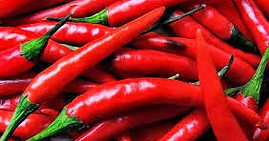
Lombok & Rawit (red, orange or green pepper)
Lombok, also known as red pepper, Spanish pepper, or chili pepper, is the fruit of a plant native to South America, Capsicum annuum. It is a member of the nightshade family (Solanaceae) and belongs to the group of fruit crops. Botanically speaking, sweet bell peppers and hot peppers are the same.
In online seed shops and catalogs, the many names sometimes lead to confusion because the names paprika and pepper are used for both types. In English, both a paprika and a pepper are called 'pepper', sometimes with the addition of sweet pepper or bell pepper, hot pepper, and sometimes also chilli or chili for a hot pepper. In Belgium, too, the name pepper is used for both paprika and pepper (often with the addition of sweet pepper and spicy pepper).
The Netherlands is one of the few countries that clearly uses the names paprika for a sweet pepper and peper for a hot pepper. And for the Netherlands, too, a general name like sweet and spicy peppers for peppers and paprikas might be useful. For meanwhile, the distinction between the two is blurring: there are varieties (such as the Ancho Poblano, Pimiento del Piquillo, Pimiento de Padron, and Numex Big Jim) that have the size and/or shape of a paprika but can certainly also be mildly spicy to quite hot.
Spread across the globe, more than 3,000 varieties of this plant are known, with the peppers varying in color (orange, green, or red), size, shape, flavor, and spiciness. Very small (2 cm) peppers are called cabé rawit. All have a fairly spicy taste, with the seeds being the hottest. These peppers are used throughout almost all of Asia and certainly in all kinds of Indonesian dishes. Lombok is also often used to make sambal; for instance, sambal ulek (based purely on lombok and salt) is one of the best-known types of sambal. The difference between green and red lombok is that the red one is ripe and therefore spicier, while the green one is not yet ripe and consequently milder in taste.
Spicy food has the pleasant side effect that the body cools down through perspiration, thereby regaining functionality. According to research from 2017, red pepper can prolong life. Researchers suspect that capsaicin is an important substance for combating atherosclerosis, and that this reduces the risk of developing fatal diseases. Black pepper stimulates saliva production, for which it is important to chew thoroughly and for a long time and to consume sufficient fluids. The enzymes in saliva play an important role in the digestion of carbohydrates.

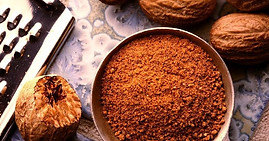
Pala (nutmeg)
Nutmeg is a spice derived from the nutmeg tree (Myristica fragrans), which is cultivated in rainy tropical coastal regions. Contrary to what the name suggests, nutmeg is not a nut, but a kernel. This kernel comes from the nutmeg tree. Only these trees bear yellow, apricot-like fruits containing a rock-hard kernel. This kernel is often ground into powder. You can also buy a whole nutmeg kernel in some supermarkets that you can grate, so you can sprinkle a little over your meal yourself.
The nutmeg tree is native to the Moluccas, where it can reach a height of up to 15 meters. The nutmeg is oval in shape and approximately two and a half centimeters long. On plantations, almost exclusively female trees are cultivated, because the male trees do not bear fruit. The nutmeg is very hard. Therefore, in (Asian) cuisine, nutmeg is used only in grated form (nutmeg) as a spice and flavoring.
If you want to keep the flavor of your dish optimal, it is best not to sprinkle too much over your meal. Did you overdo it? Then you would be wise to throw the entire dish away. In fact, if you ingest 5 grams (2 teaspoons) or more, this can cause nutmeg poisoning. Characteristic symptoms include abdominal pain, vomiting, drowsiness, or conversely, restlessness or panic. Moreover, it can cause severe hallucinations. Nutmeg contains the substance myristicin, which is converted in the body into MMDA, a substance very similar to the hallucinogenic substance in ecstasy. Just like this drug, an excess of nutmeg can cause hallucinations. Very occasionally, nutmeg is used as a party drug.
In the Netherlands, it was widely used in the last century as a spice for overcooked vegetables and, of course, in speculaas. But with its robust, bitter flavor, you can also achieve beautiful results in the more modern kitchen. Place the nutmeg in an airtight container and store it in a cool, dry, and dark place to ensure it keeps for a long time.
Nutmeg promotes saliva production, strengthens the stomach, stimulates digestion, is antispasmodic, relieves flatulence, and has anti-inflammatory effects on the mucous membranes, and is antibacterial. Eugenol and iso-eugenol are the main active compounds and are largely responsible for the aforementioned medicinal effects. Nutmeg can be used for its medicinal effects in cases of insomnia, toothache, brittle bones, dementia, cardiovascular disease, anemia, and cancer.

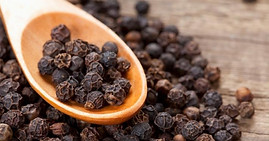
Rica (pepper)
Pepper is a spice used in the kitchen with a sharp taste. Pepper grows as berries on the tropical pepper plant, Piper nigrum. You therefore use pepper to make food a bit spicy. Without salt and pepper, people often find food a bit bland, or tasteless. The pepper plant grows in tropical countries, such as Indonesia, but also in Brazil. Originally, pepper grew mainly in India. Peppers are the berries of the plant.
The sharp taste of black peppercorns is caused by the compound piperine. Pepper comes in different color varieties: black, white, and green. Four Seasons pepper—who doesn't know it? It is a delicious mix of four types: black, white, and green peppercorns, and the pink ones that are not true pepper. It might be interesting to know that pepper was used as a valid means of payment in the Middle Ages. Hence the term "peperduur" (literally "peppercorn expensive").
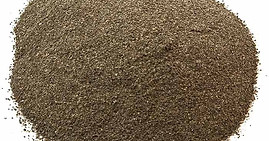
Is there a difference between white and black pepper? First of all, it is good to know that white and black peppercorns come from the same plant. However, this is no proof that it doesn't matter which variety you use. For black pepper, the unripe peppercorn is dried in the sun, giving the kernel a stronger flavor. White pepper ripens on the plant until the pepper turns orange or red. Next, the skin is loosened under running water, the white flesh is dried, and thus the white peppercorn is formed. As a result, white pepper has a more aromatic flavor.
Black pepper primarily adds heat to your food, while white pepper provides an earthy flavor. For this reason, white pepper is mainly used in Asian cuisine, as it combines well with spices such as cumin and turmeric. Additionally, the taste of white pepper is more subtle, whereas the black variety can be quite dominant.
Depending on the region where the pepper plant grows, there are differences in taste. For example, the black variety can be very spicy or have "citrus notes." Are you going for flavor? Then always buy whole peppercorns. Whatever color they are, freshly ground pepper always tastes best.
According to scientific research from Annamalai University in India in 2004, black pepper, due to its high antioxidant content, can help prevent a high-fat diet from leading to disease. On the other hand, black pepper can also have adverse effects on fertility in both men and women. In cases of autoimmune or thyroid problems, as well as issues with blood pressure and blood pressure-lowering medication, it is advisable to consult your treating physician regarding the use of black pepper. This is because black pepper lowers blood sugar levels.

.png)


